
Recently, children with red rashes on both lower legs have been visiting the clinic from time to time. Most rashes are petechial manifestations, painless and itchless, and the rash persists and does not fade after pressing.
In combination with the child's history of upper respiratory tract infection before the rash appeared, it is easy to diagnose “IgA vasculitis” (IgA vasculitis, IgAV), a name more familiar to everyone is “Henoch-Schönlein purpura”.
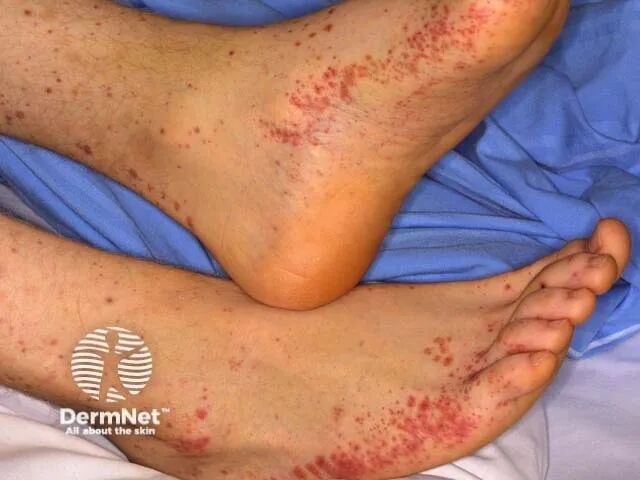
Many parents become nervous upon hearing the term “Henoch-Schönlein purpura”: “Doctor, is my child allergic to something that causes skin bleeding? Do they need to avoid certain foods or get allergy tests?”
Actually, Henoch-Schönlein purpura is an old term for the disease. Now more clinicians would refer to this disease as “IgA vasculitis”. This is a relatively common systemic vasculitis in children, with an incidence rate of (3-27)/100,000.
What is IgA Vasculitis?
IgA vasculitis is common in adolescents and children, usually caused by infections, which is not the same as the “food allergies” or “pollen allergies” we often talk about.
Literature indicates that about half of IgA vasculitis follows upper respiratory tract infections, especially those caused by Streptococcus infections. In addition, vaccinations and insect bites can also trigger it, but they are relatively rare.
Unlike the purpuric diseases of the blood system that many people worry about, it is usually a self-limited vasculitis episode. If early recognition can be achieved and close observation is maintained, most cases will gradually improve on their own. Moreover, allergy tests are usually not required.
What Are the Common Manifestations of IgA Vasculitis?
1. Rash
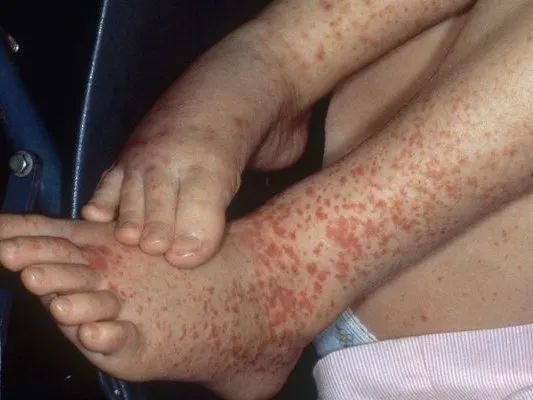
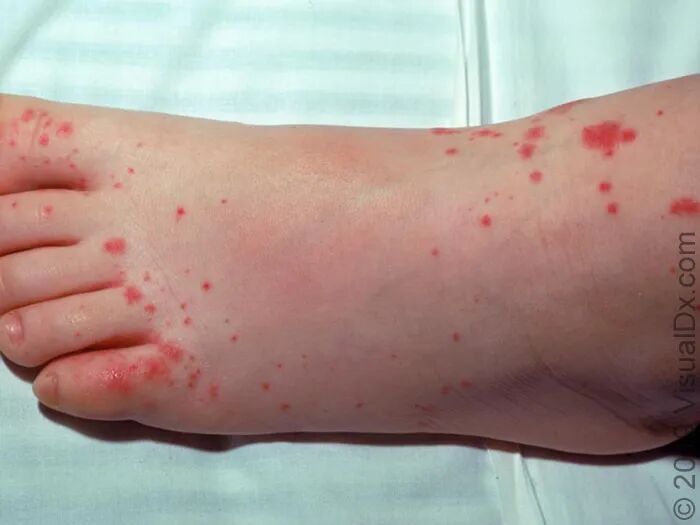
Bilateral lower limbs symmetrically present painless and itchless purpuric rashes, some rashes can be raised above the skin surface. Rashes may recur and worsen, especially after standing or walking for extended periods.
2. Joint Symptoms
About 75% of children may have joint symptoms, commonly seen in knees, ankles, or hips, and may occur in the early or middle stage of the disease.
However, there is generally no joint effusion, redness, or increased skin temperature. Some patients may have significant pain and limited mobility, but after adequate rest or medication, joint symptoms can disappear without causing chronic damage or sequelae.
3. Gastrointestinal Symptoms
About 25%-50% of children may experience gastrointestinal symptoms:
- Mild cases: Nausea, vomiting, abdominal pain, and short-term pseudo-obstruction of the intestine.
- Severe cases: Gastrointestinal bleeding, intestinal ischemia and necrosis, intussusception, and intestinal perforation.
Some gastrointestinal bleeding symptoms may persist for several weeks.
4. Renal Symptoms
Usually no obvious gross hematuria, often requiring laboratory urinalysis to confirm early renal changes.
What Should Parents Do If They See Purpura on Their Child's Lower Legs?
See a doctor immediately, complete blood routine examination and coagulation tests, to rule out other systemic purpuric diseases of the blood system, or bleeding diseases caused by deficiencies such as prothrombin.
If there are symptoms such as abdominal pain or joint pain, it is recommended to check for fecal occult blood, urinalysis, etc., to rule out the risks of gastrointestinal bleeding, hematuria, proteinuria, etc., caused by kidney damage.
If urinalysis is abnormal, with proteinuria or hematuria, it is recommended to see a nephrologist.
How Should IgA Vasculitis Be Treated?
The vast majority of IgA vasculitis patients can recover on their own, and doctors may give the following advice:
- Rest at home adequately and avoid excessive exercise.
- When resting in bed, elevate the lower limbs, which helps to improve lower limb edema, reduce the recurrence of rashes, and the recovery of some arthritis.
- For mild joint pain or abdominal pain, oral painkillers can be taken under the guidance of a doctor.
- For severe intractable abdominal pain or joint pain where oral painkillers are ineffective, systemic corticosteroids are usually recommended, and hospitalization is usually advised.
- For children with abdominal pain who cannot take oral rehydration, hospitalization for intravenous rehydration is also recommended.
Will It Recur Throughout Life?
Actually, according to current literature reports, most children recover quite well. More than half (about 2/3) of the children will not relapse.
The remaining children (about 1/3) may relapse once, usually within the first half year after the initial illness. If relapse occurs, the symptoms are generally milder or shorter in duration than the first time.
If this illness was caused by a cold or fever, the possibility of relapse is relatively small. If this time there was arthralgia or abdominal pain, the possibility of relapse next time will be greater.
The most important thing to pay attention to here is the children with kidney involvement. If the kidney is affected, the vast majority (90%) will be discovered within the first two months of illness. Almost all (97%) of the children with kidney damage will be discovered within half a year. Adults with this disease are more likely to have kidney problems, both at the onset of the disease and later.
Important Follow-up
All children with IgA vasculitis should have regular urine tests (urinalysis) in the first 1-2 months after falling ill. Adult patients also need to monitor blood pressure, and it is recommended to do these tests once a week or every two weeks. This can help doctors detect any kidney problems in a timely manner.
Understanding these situations, if you encounter suspicious rashes, always seek medical help in time!
References
- IgA vasculitis (Henoch-Schönlein purpura): Clinical manifestations and diagnosis. UpToDate. 2025.
- IgA vasculitis (Henoch-Schönlein purpura): Management. UpToDate. 2025.
- Bolognia. Dermatology (简体中文版) [M]. Translated by Zhu Xuejun, et al. Beijing: Peking University Medical Press, 2019.
Disclaimer & Credits
This article was initially drafted with AI assistance, refined by our editorial team, and finalised following professional review by Distinct Healthcare physicians.
This is original content by Distinct Healthcare, provided for informational purposes only and not intended as medical advice. For personalised guidance, please consult a qualified physician.
Contact: health_content@distincthealth.com
Produced by: Distinct Healthcare · Health Express Team
Editorial: Health Express Editorial Team
Medical Review: Distinct Healthcare Physician Team