
In recent years, more and more parents have been paying close attention to their children's growth and development, eagerly hoping their children will grow tall. In the common perception, a child growing tall and shooting up quickly is undoubtedly a good thing.
However, in clinical practice, some seemingly "impressive growth" actually conceals problems that are easily overlooked.
Beyond the well-known condition of precocious puberty, pediatric and adolescent hyperthyroidism is another issue that should not be ignored. Let's start with a clinical case.
A Child Who Grew 9.2 cm in One Year
This is an 8-year-and-10-month-old girl whose parents brought her in for routine growth monitoring. After reviewing her growth data, it was discovered that the child had grown a full 9.2 cm in one year — a growth rate far exceeding the normal standard for children her age (normal pre-pubertal children grow 5–7 cm per year).
The first thought was: has the child entered puberty early?
But after a thorough physical examination, the results were surprising: the child showed no signs of secondary sexual development whatsoever — her chest was flat, her external genitalia showed entirely prepubertal characteristics, and there were no signs of pubertal onset.

Abnormally accelerated growth with no pubertal development signals — why would this happen?
Further examination revealed more abnormalities: the child's resting heart rate was 136 beats per minute, far exceeding the normal resting heart rate range for children her age!
Upon further inquiry about the child's daily condition, the parents recalled that the child had mentioned heart palpitations in the past month. They had taken her for an ECG and cardiac enzyme tests, but apart from sinus tachycardia, no other abnormalities were found. They assumed it was due to academic stress and insufficient rest, and did not investigate further.
Combining the unique features of this case — no pubertal development but abnormally accelerated growth + unexplained tachycardia + palpitations — the doctor immediately recommended comprehensive thyroid function testing, thyroglobulin antibodies, and anti-thyroid peroxidase antibodies.
The test results showed significantly elevated thyroid-related antibodies, markedly decreased TSH (thyroid-stimulating hormone), and clearly elevated T3 and T4 thyroid hormones. Combined with clinical symptoms and laboratory findings, a diagnosis of hyperthyroidism caused by pediatric Graves' disease was confirmed.
The parents were astonished: Can such a young child really have hyperthyroidism? The child doesn't have a swollen neck or bulging eyes — how could she have hyperthyroidism?
7 Key Facts About Pediatric Hyperthyroidism
Hyperthyroidism, formally known as thyroid hyperfunction (hyperthyroidism), refers to a group of clinical syndromes caused by excessive production and secretion of thyroid hormones by the thyroid gland.
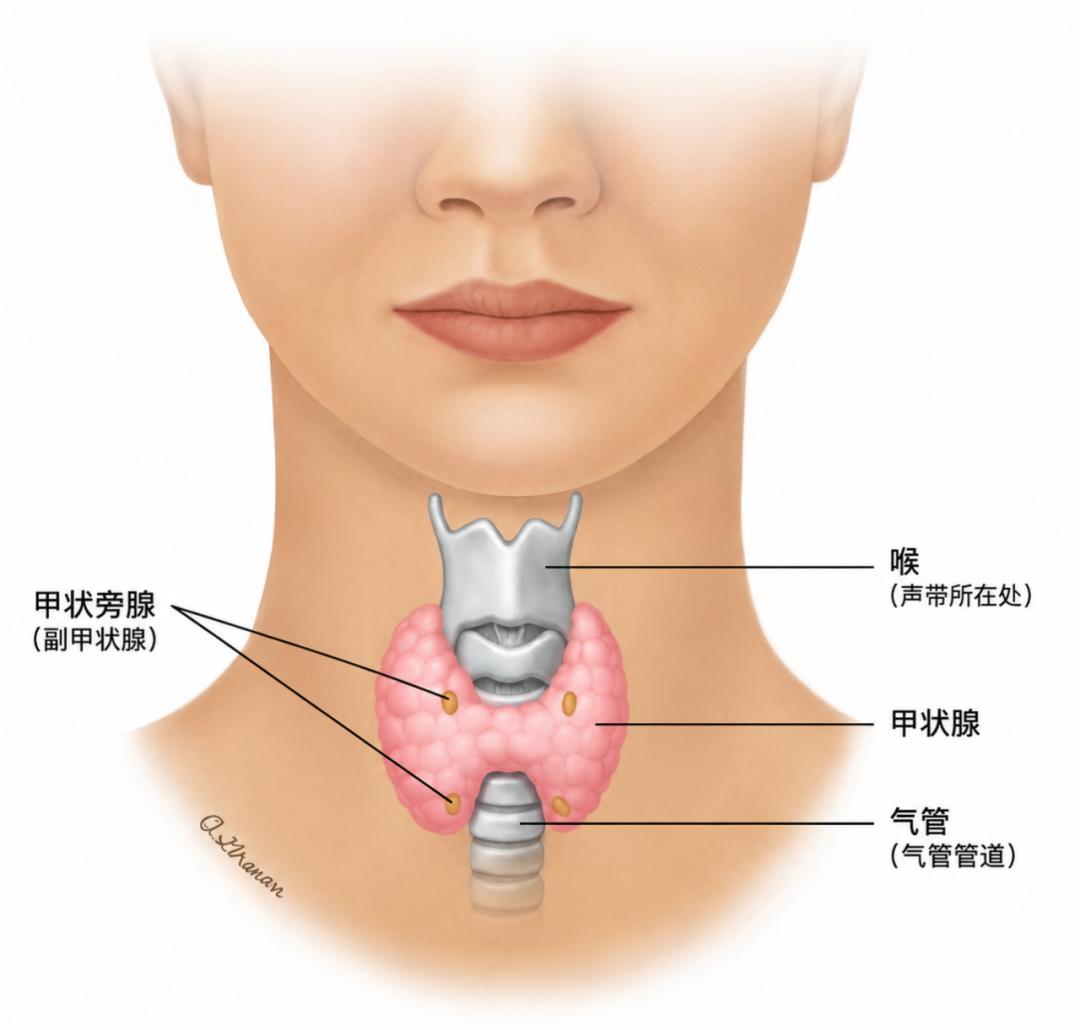
Among the causes, toxic diffuse goiter, also known as Graves' disease (GD), is the most common (accounting for approximately 84%) and has a high incidence during puberty.
1. Don't Be Misled by Stereotypes: Hyperthyroidism Is Not Exclusive to Adults
Although hyperthyroidism is more common in adult women, pediatric hyperthyroidism — especially adolescent hyperthyroidism — is not uncommon. Epidemiological data shows that the incidence of hyperthyroidism in children and adolescents is approximately 1 in 5,000, with the vast majority being Graves' disease.
Graves' disease is the primary culprit behind pediatric hyperthyroidism. Its essence is autoimmune dysregulation that produces thyroid-stimulating hormone receptor antibodies (TRAb). TRAb binds to and activates the receptor, continuously stimulating the thyroid to excessively synthesize and secrete thyroid hormones, keeping the child's body in a state of "overdrive" with high metabolism.
The incidence of Graves' disease increases with age, with a sharp rise during puberty — approximately 80% of pediatric patients develop the disease after age 11. During puberty, the female-to-male incidence ratio is approximately 5:1.
This ratio is much lower in younger children, suggesting that estrogen secretion may somehow influence autoimmune susceptibility to Graves' disease.
2. Pediatric Hyperthyroidism Symptoms Differ from Adults
Most clinical features of thyrotoxicosis in children and adolescents are similar to those in adults: cardiovascular manifestations such as palpitations and tachycardia; increased appetite, excessive thirst, frequent urination, increased bowel movements but weight loss; emotional instability, irritability, and nervousness; heat intolerance and excessive sweating.
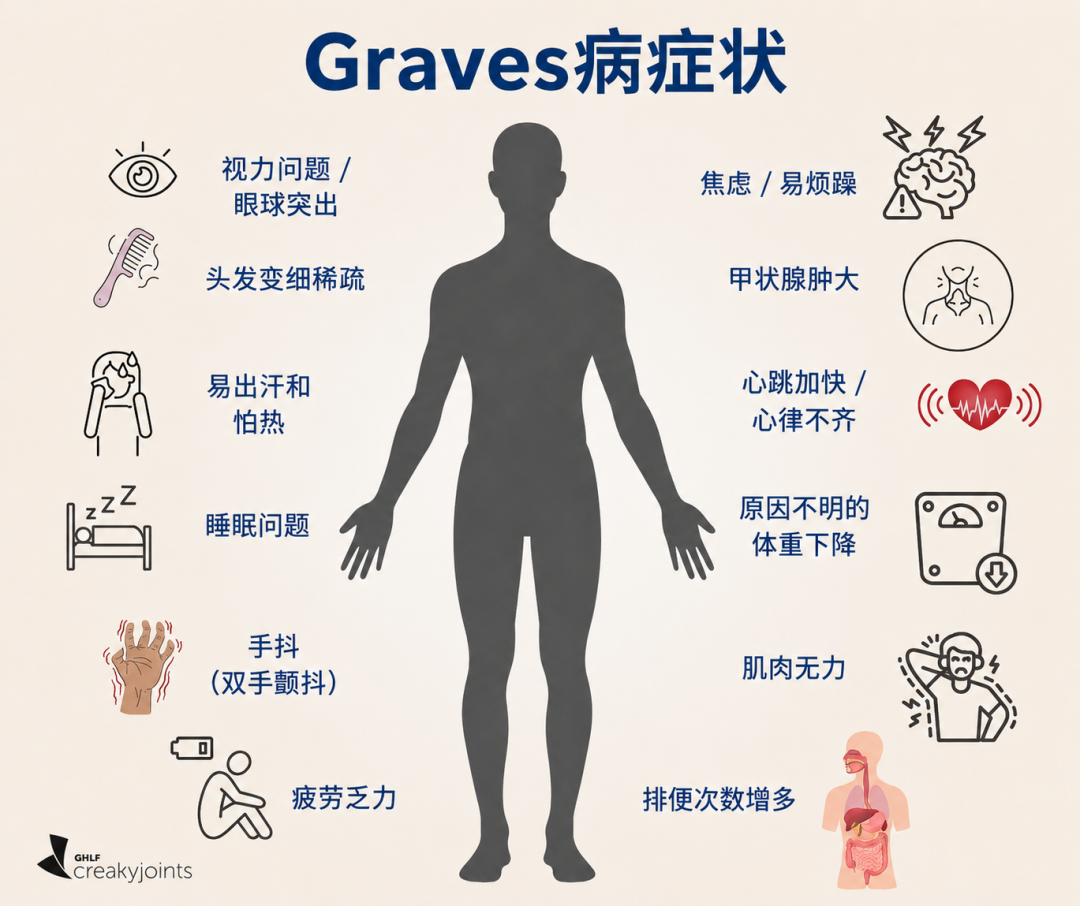
However, exophthalmos (bulging eyes) is relatively uncommon in children compared to adults, and children with mild hyperthyroidism may have few clinical manifestations or even be asymptomatic. In these children, symptoms appear insidiously, often going undiagnosed for months or years after changes begin, and are easily overlooked by parents.
3. Unique Features of Pediatric Hyperthyroidism
A key difference between children and adults is that children are still in a period of rapid growth and development. Prolonged hyperthyroidism without proper medication may affect children's growth and pubertal development.
Thyroid hormones are among the important hormones regulating children's growth and skeletal maturation. Excessive thyroid hormones cause accelerated growth with premature epiphyseal maturation, and the degree of growth acceleration typically depends on the duration of the hyperthyroid state before diagnosis.
For example, in a child who has had hyperthyroidism for 1–2 years, height may rise from the 50th percentile to the 75th percentile. Just like the girl in our case — growing 9.4 cm in one year may seem impressive, but it actually conceals hidden dangers.
4. Palpitations and Rapid Heart Rate May Not Always Be Cardiac Disease
The heart is one of the primary target organs of thyroid hormones. Excessive thyroid hormones directly enhance myocardial contractility, accelerate heart rate, and increase cardiac output, keeping the child in a persistent state of tachycardia.
In clinical practice, many children with hyperthyroidism present with recurrent chest tightness, palpitations, and rapid heartbeat. For these patients, one should not focus solely on cardiac disease itself but also consider the possibility of endocrine disorders, and ensure thyroid function testing is performed.
5. Pay Attention to Behavioral and Psychological Manifestations
Compared to adults, mood instability and behavioral abnormalities in children with hyperthyroidism are often more pronounced. Children may experience decreased concentration, hyperactivity, and poor sleep, and their academic performance may decline.
For this reason, many children with hyperthyroidism are referred to developmental-behavioral or child psychiatry specialists for evaluation of emotional and behavioral symptoms before hyperthyroidism is suspected. Short attention spans and poor academic performance may also be misdiagnosed as Attention Deficit Hyperactivity Disorder (ADHD).
Therefore, for school-age children with unexplained academic decline, weight loss, sleep problems, or emotional issues, it is important to screen for hyperthyroidism.
6. Warning Signs of Pediatric and Adolescent Hyperthyroidism
Based on the information above, pediatric and adolescent hyperthyroidism is actually not uncommon clinically. Adolescent girls have a much higher incidence than boys, and genetics, autoimmune dysregulation, and immune imbalance are all common predisposing factors. Many children have an insidious onset, with early manifestations limited to a single atypical symptom, making it difficult for family members and doctors to detect obvious abnormalities.
However, when children present with the following manifestations, hyperthyroidism should be considered and appropriate diagnostic evaluation should be performed:
- Abnormally excessive growth rate: School-age children growing more than 8 cm per year without any signs of pubertal development.
- Unexplained tachycardia: Elevated resting heart rate, such as a school-age child with a sustained heart rate above 100 beats/minute, reporting palpitations, chest tightness, or racing heart.
- Metabolic and emotional abnormalities: Heat intolerance, excessive sweating, increased appetite with no weight gain or even weight loss, abnormal mood swings, poor concentration, and unexplained academic decline.
- Sleep disturbances: Difficulty falling asleep, insomnia, and excessive dreaming.
7. Diagnosing Pediatric Hyperthyroidism Is Not Difficult
In fact, diagnosing pediatric hyperthyroidism is not difficult. The key is that we need to deepen our understanding of pediatric hyperthyroidism and correct the stereotype that hyperthyroidism only occurs in adults.
Based on the symptoms of pediatric hyperthyroidism mentioned above, combined with the following findings:
- Physical examination or neck ultrasound confirming diffuse thyroid enlargement (though a minority of cases may have no thyroid enlargement).
- Thyroid function tests: Decreased thyroid-stimulating hormone (sTSH), elevated thyroid hormone levels (elevated serum total T3, total T4, free T3, and free T4).
- Thyroid autoantibody testing: Including thyroid-stimulating hormone receptor stimulating antibody (TSAb) or thyroid-stimulating hormone receptor antibody (TRAb). These two antibodies are specific biomarkers for Graves' disease — a positive result indicates that the child's hyperthyroidism is caused by Graves' disease.
- Thyroid peroxidase antibody (TPOAb) and thyroglobulin antibody (TgAb): These can also serve as supplementary reference indicators.
Pediatric Hyperthyroidism Is Not Frightening — Early Diagnosis and Intervention Are Key
Many parents become anxious and fearful after their child is diagnosed with hyperthyroidism, worrying about effects on growth and development, lifelong medication, or lasting sequelae.
In reality, the treatment protocol for pediatric Graves' disease hyperthyroidism is well-established. The first-line treatment is methimazole anti-thyroid medication, which is safe and controllable. With early detection, early diagnosis, and early standardized intervention — combined with regular thyroid function monitoring and medication dose adjustments — the vast majority of children can achieve gradual stabilization of thyroid function and long-term disease remission.
After timely intervention, the child's heart rate, palpitations, chest tightness, and other discomfort will resolve. Growth and development will return to normal trajectory without affecting subsequent pubertal development or adult height, and without leaving cardiac or neurological sequelae.
Only a small number of children who are intolerant to medication or have frequent relapses may need surgical or radioactive iodine definitive treatment depending on age and disease severity. Post-operatively, lifelong hormone replacement and regular monitoring are required, but the prognosis for most of these children is equally good.

A Final Word to All Parents
A child growing taller is a good thing, but abnormally rapid growth requires attention — it may be a warning signal from the body. Pediatric hyperthyroidism has never been rare; it is simply very good at "disguising" itself. It doesn't necessarily present with a thick neck or bulging eyes — more often, it hides in subtle details like "growing too fast, heart beating too fast, palpitations and chest tightness, worsening temper, and declining grades."
Parents should monitor their children's growth and development — don't just look at whether the height numbers are increasing, but also whether the growth pace matches the child's age and whether developmental milestones are progressing in sync.
When encountering abnormally accelerated growth or unexplained palpitations in a child, don't limit the investigation to cardiac evaluation or puberty assessment alone. One additional step — thyroid function screening — can prevent diagnostic detours and protect your child's growth, development, and long-term health.
Disclaimer & Credits
This article was initially drafted with AI assistance, refined by our editorial team, and finalised following professional review by Distinct Healthcare physicians.
This is original content by Distinct Healthcare, provided for informational purposes only and not intended as medical advice. For personalised guidance, please consult a qualified physician.
Contact: health_content@distincthealth.com
Produced by: Distinct Healthcare · Health Express Team
Editorial: Health Express Editorial Team
Medical Review: Distinct Healthcare Physician Team