
Have you ever experienced this kind of embarrassment—
During the morning rush-hour commute every day, the subway feels like being squeezed into a can of fermented jackfruit, with sweat odour and underarm odour mingling together. Ride-hailing cars, lifts and gyms are also filled everywhere with a clammy smell...
But more devastating than being put off by others is suddenly discovering that you yourself are the source of that sharp, fermented smell:
When you stand up after a meeting, there are two dark sweat patches under the arms of your shirt;
On a date, you secretly hold your arms tightly against your sides, afraid that the other person might smell something;
Even after washing your clothes several times, the smell in the underarm area still will not go away.
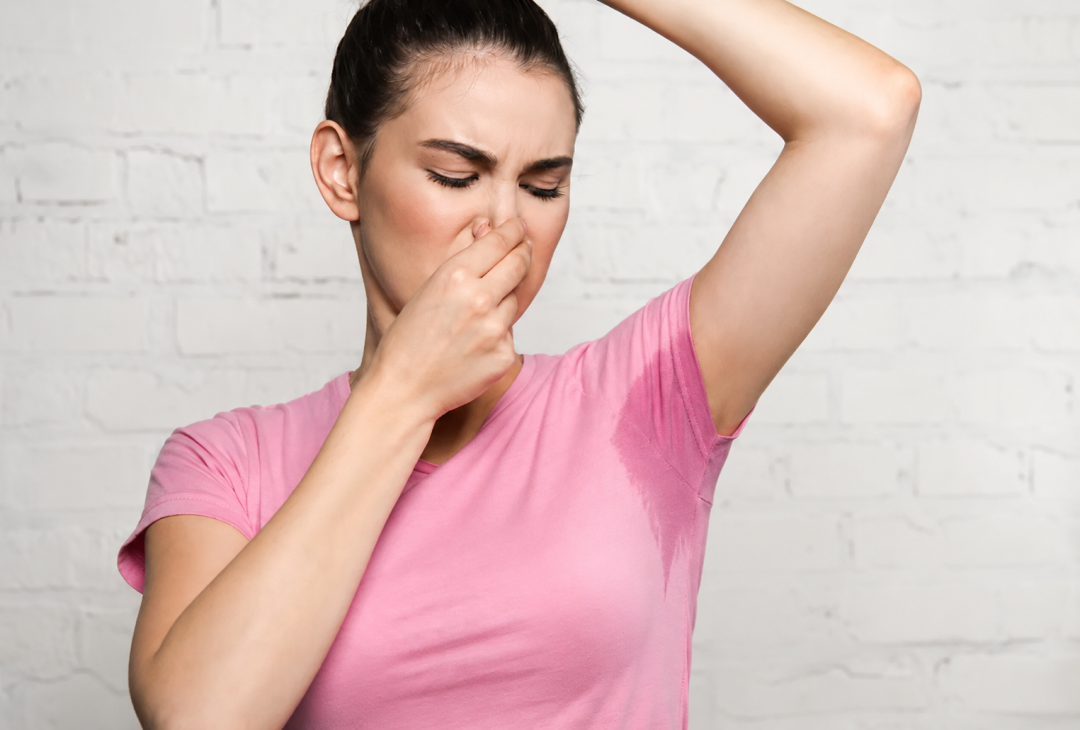
The hotter the weather, the more you sweat, but why is it specifically underarm sweat that has the most overpowering smell? How can it be effectively improved?
Your Whole Body Sweats—But Why Do Your Underarms Smell the Worst?
First, here is a counterintuitive fact: freshly secreted sweat is actually odourless.
The human body has two ‘sweating systems’—
- Small sweat glands (eccrine glands): found throughout the body, the sweat they secrete is 99% water, and they are responsible for dissipating heat and cooling the body; it is essentially odourless;
- Large sweat glands (apocrine glands): concentrated in areas such as the underarms and groin, and mature after puberty. The sweat they secrete contains fatty acids, proteins, steroids and other substances.
The mystery is solved—the problem actually lies with these apocrine sweat glands!
The underarms are home to large numbers of corynebacteria and staphylococci. After they ‘eat’ the odourless precursor substances secreted by apocrine glands, they metabolise them into volatile fatty acids (which smell like sour cheese) and sulphur-containing compounds (which smell like onions), and this is the source of underarm odour [1].
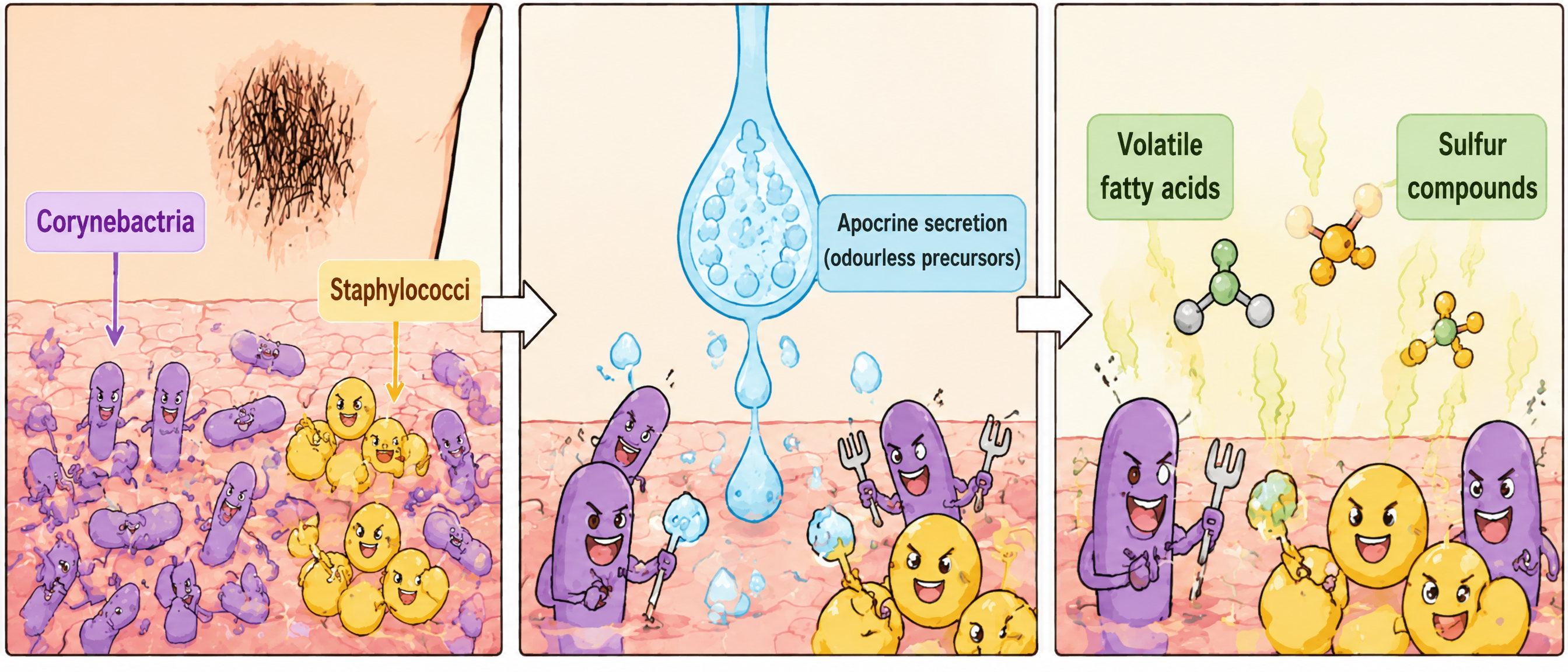
Simply put: sweat itself does not smell; it is the underarm bacteria that ‘process’ the sweat and produce the odour.
After Removing Underarm Hair, Will You Sweat More or Smell Stronger?
This is also a question many people want to ask, so here is the answer first: properly performed hair removal does not increase the amount you sweat.
Clinical research has found that after underarm hair is removed, underarm odour actually decreases temporarily, because hair is a ‘base’ where bacteria attach and reproduce; removing the hair reduces the area bacteria can inhabit, although this odour-reducing effect is relatively short-lived [2].
Then why do some people feel that they ‘sweat more’ after hair removal? This is more likely a change in perception—
After underarm hair is removed, sweat comes directly into contact with the skin and clothing rather than being absorbed and dispersed by the hair, so its ‘presence’ becomes stronger and it is simply easier to notice.
Why Perfume Cannot ‘Cover Up’ Sweat Odour
Many people’s first reaction is: Sweat has an odour? Why not just spray perfume to cover it up? But in fact, the result may fall short of expectations.
This is because perfume is designed to ‘add fragrance’; it can neither reduce sweating nor suppress odour-producing bacteria. The root cause of sweat odour is not addressed, and once the fragrance fades, the odour remains.
In addition, everyone should know that fragrance + sweat odour does not necessarily equal a pleasant smell.
Research has found that when perfume and body odour mix, they create a ‘new blended odour,’ and the effect varies from person to person [3]. Moreover, to completely cover an unpleasant odour with fragrance, the required fragrance concentration may far exceed the amount used in daily life.
So How Can You Effectively Improve Excess Underarm Sweating and Sweat Odour?
The scientific approach is ‘three-pronged’:
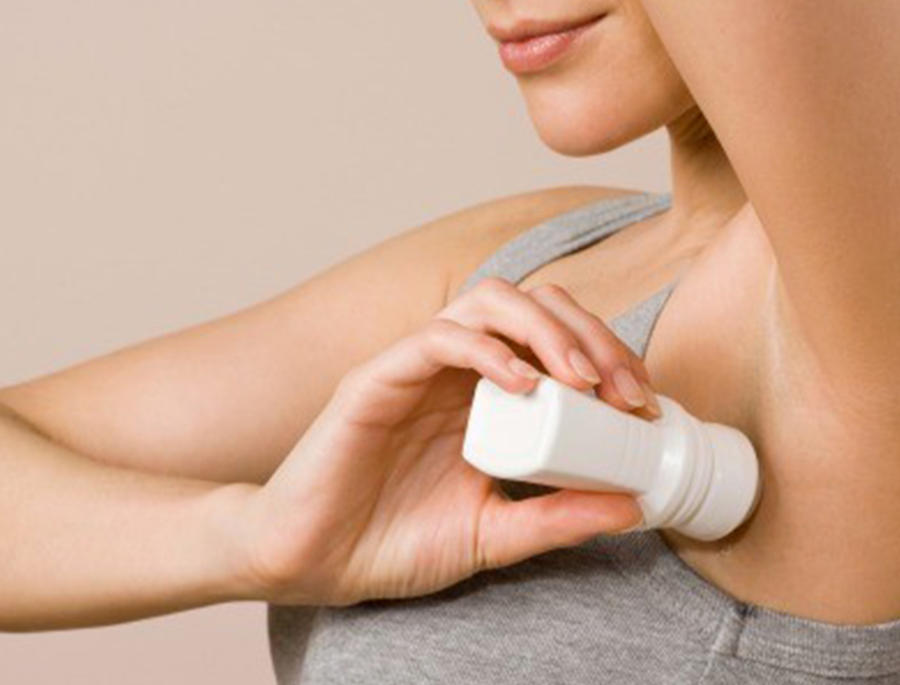
- Reduce sweat secretion: use antiperspirants containing aluminium salts (such as aluminium chlorohydrate/aluminium zirconium tetrachlorohydrex). The polymeric cations of aluminium bind to proteins in sweat, temporarily and physically blocking sweat from reaching the skin surface within the sweat-gland ducts. This blockage is superficial and reversible, and naturally sheds away as part of normal skin metabolism;
- Suppress odour-producing bacteria: choose products containing antimicrobial ingredients to reduce the number of ‘odour producers’ such as corynebacteria;
- Keep the underarms dry: wear clothing made from breathable, quick-drying fabrics, and combine this with antiperspirant products to keep the body dry and comfortable.
If everyday antiperspirant products still cannot meet your needs and sweating seriously affects your quality of life, it is recommended that you see a dermatologist.
References
1. Natsch A, Emter R. The specific biochemistry of human axilla odour formation viewed in an evolutionary context. Philos Trans R Soc Lond B Biol Sci. 2020 Jun 8;375(1800):20190269. doi: 10.1098/rstb.2019.0269. Epub 2020 Apr 20. PMID: 32306870; PMCID: PMC7209930.
2. Bosch TC, Zengler K, Naik S, Biedermann T, Kong HH, Loser K, Brüggeman H, Calleawert C, Lambert J, Van de Wiele T. FRT - FONDATION RENE TOURAINE: An International Foundation For Dermatology. Exp Dermatol. 2016 Nov;25(11):917-932. doi: 10.1111/exd.13160. PMID: 27792248.
3. Allen C, Havlíček J, Roberts SC. Effect of fragrance use on discrimination of individual body odor. Front Psychol. 2015 Aug 7;6:1115. doi: 10.3389/fpsyg.2015.01115. PMID: 26300812; PMCID: PMC4528100.
4. Letzel M, Drexler H, Göen T, Hiller J. Impact of Daily Antiperspirant Use on the Systemic Aluminum Exposure: An Experimental Intervention Study. Skin Pharmacol Physiol. 2020;33(1):1-8. doi: 10.1159/000502239. Epub 2019 Sep 25. PMID: 31553995.
5. Pineau A, Guillard O, Favreau F, Marrauld A, Fauconneau B. In vitro study of percutaneous absorption of aluminum from antiperspirants through human skin in the Franz™ diffusion cell. J Inorg Biochem. 2012 May;110:21-6. doi: 10.1016/j.jinorgbio.2012.02.013.
Disclaimer & Credits
This article was initially drafted with AI assistance, refined by our editorial team, and finalised following professional review by Distinct Healthcare physicians.
This is original content by Distinct Healthcare, provided for informational purposes only and not intended as medical advice. For personalised guidance, please consult a qualified physician.
Contact: health_content@distincthealth.com
Produced by: Distinct Healthcare · Health Express Team
Editorial: Health Express Editorial Team
Medical Review: Distinct Healthcare Physician Team