
丨Click on the card above to make an appointment or consult with a doctor
Recently, many mothers around have started to “move”: running, aerobics, swimming, weightlifting, punching in three to five times a week.
But the problem came along – after exercising, they need to wash their hair, they need to wash their hair the next day to meet people, and they have to wash it again when their scalp itches. Washing hair every day for several days in a row.
As a result, they found that: Their hair seems to get oily more easily, and the hair in the drain is accumulating more and more. Is there any harm in washing hair every day?
Conclusion first:
Most people will not have their scalp oil worsened by washing their hair too frequently, but if they choose inappropriate hair care products or improperly select shampoo products, it may disrupt the balance of the scalp’s sebum membrane, leading to exacerbated oil problems.
Let’s delve into this issue in detail. First, we need to understand, whether the frequency of washing hair affects the secretion mechanism of the scalp’s sebaceous glands.
Scalp oil, also known as “sebum,” is mainly secreted by the sebaceous glands associated with hair follicles, and its main components include triglycerides, free fatty acids, wax esters, squalene, and cholesterol.
The physiological role of sebum on hair
From a medical perspective, the physiological impact of sebum on hair can be divided into the following aspects:
I. Normal physiological role
1. Barrier and lubrication
Sebum, along with sweat and other substances, forms the “sebum film,” which covers the scalp and hair shaft, forming a physical barrier, reducing transepidermal water loss and maintaining the flexibility of the scalp and hair .
The lipid components in sebum can lubricate the hair shaft, reduce mechanical friction during combing, and prevent hair breakage .
Sebaceous gland
2. Antimicrobial and antioxidant
The free fatty acids in sebum, mainly linoleic acid and oleic acid, have certain antibacterial effects and can inhibit the overgrowth of pathogenic microorganisms such as Staphylococcus aureus and Malassezia .
Squalene has antioxidant properties and can neutralize reactive oxygen species induced by ultraviolet radiation, protecting hair follicle cells from oxidative damage .
3. Microecological regulation
Sebum provides nutrition for commensal bacteria (such as Propionibacterium) , maintaining the balance of the scalp microbiome , inhibiting the colonization of opportunistic pathogens (such as Malassezia) , reducing inflammatory responses .
II. Pathological effects of abnormal sebum secretion
Excessive secretion
1. Imbalance of the hair follicle microenvironment
Excessive sebum leads to lipid peroxidation, producing irritating by-products such as malondialdehyde, which destroys the keratinocytes around the hair follicle, causing abnormal keratinization at the hair follicle opening, leading to the formation of hair follicle plugs, and subsequently easily leading to changes such as folliculitis .
Sebum broken down by Malassezia into free fatty acids stimulates the scalp to produce inflammatory factors (IL-1α, TNF-α) , inducing seborrheic dermatitis or folliculitis, exacerbating androgenetic alopecia .
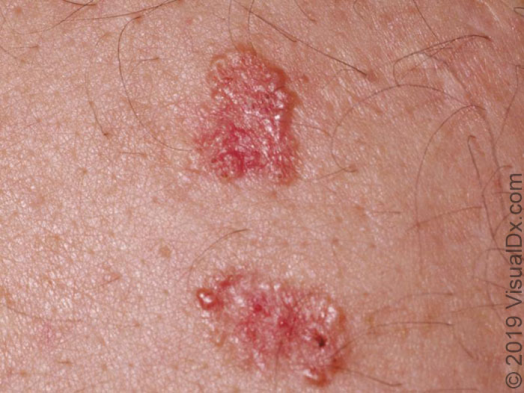
Seborrheic dermatitis
Folliculitis
Androgenetic alopecia
2. Mechanical compression and hypoxia
Sebum accumulated within the hair follicle may compress the dermal papilla, affecting the proliferation and differentiation of matrix cells, leading to a shortened anagen phase and an increased proportion of telogen hairs .
Insufficient secretion
1. Destruction of the scalp barrier
A lack of sebum can easily lead to dry scalp and fissures in the stratum corneum , making it susceptible to invasion by external irritants or allergens, causing itching and erythema , and in severe cases, xerotic eczema changes .
2. Hair cuticle (scales) lack of lipid lubrication
The hair cuticle (scales) lacks lipid lubrication and lifts, making the hair prone to breakage, splitting, and reduced luster .
III. Key factors in regulating sebum secretion
1. Hormonal regulation
Androgens, especially 5α-dihydrotestosterone (DHT), are the main stimulating factors that control the development of sebaceous glands and sebum secretion , by binding to androgen receptors on sebocytes, upregulating the expression of lipid synthesis enzymes, thereby controlling sebum secretion.
Insulin-like growth factor-1 (IGF-1) and adrenocorticotropic hormone (ACTH) can also promote sebum secretion.
2. Genetics
The density and activity of sebaceous glands are regulated by multiple genes, familial seborrheic dermatitis patients often have a phenotype of high sebum secretion .
3. Exogenous factors
High sugar, high-fat diet promotes lipid synthesis by activating the mTORC1 signaling pathway.
Excessive cleansing or alkaline hair care products can disrupt the sebum film, easily triggering a negative feedback increase in sebum secretion.
If the above professional terms are hard to understand, in layman’s terms:
Scalp oil is like having many “little oil factories” (sebaceous glands) hidden in your scalp, which work silently every day to produce natural oils (sebum) . These oils are originally a “hair conditioner” to protect the hair, keeping it from becoming dry, the scalp from cracking, and maintaining a healthy environment for the scalp. However, in some cases, it may lead to increased skin oil secretion :
1. The boss is urgent:
Hormones in the body
(especially androgens)
are like bosses,
during puberty, high stress, and staying up late
, the boss urges work frantically, and the factory produces oil overtime.
2. Family tradition:
If either parent
has a family history of seborrheic dermatitis or androgenetic alopecia, then the child is prone to
inherit a constitution with旺盛 skin oil secretion
, you may be born with a large and efficient “oil factory”.
3. Oil from eating:
Eating too much fried food and high-sugar food
, the body feels “ample oil supplies”, directly increasing the oil factory’s capacity.
4. Washing hair too vigorously: Frequent use of strong shampoos , the scalp thinks “oil shortage crisis” has arrived, instead, it makes the factory restock double.
Professional hair washing adjustment suggestions
To improve the problem of scalp oil secretion, the following basic care should be done from several aspects:
Gentle cleansing + regular life + less sugar and oil foods!
Specific suggestions are as follows:
I. Scientific hair washing
The frequency of hair washing should be considered comprehensively based on
one’s hair type, the humidity and heat of the living environment, and the amount of daily activity, etc.
.
If one has an oily scalp , they can wash their hair every other day or every day, but they need to choose the concentration or frequency of using oil-control shampoo based on the actual situation of the scalp.
And people with dry and sensitive skin should choose amino acid-based gentle hair care products, usually washing once every 2-3 days is enough.
Conditioner should mainly be applied to the mid-lengths and ends of the hair , avoiding long-term stay on the scalp.
Avoid long-term hot air blowing on the scalp repeatedly , as continuous high temperature can cause heat damage to the scalp.
Oily heads are also not recommended to frequently use dry shampoo sprays , some ingredients are easy to deposit in the scalp environment, aggravating scalp inflammatory conditions.
II. Choice of shampoo
People with oily heads can choose shampoos containing selenium sulfide, zinc pyrithione, etc. to inhibit the overgrowth of Malassezia, thereby regulating the scalp microenvironment.
If you are used to washing your hair every day , then people with oily heads can choose shampoos containing 0.5%-1% selenium sulfide for daily hair washing treatment.
But if the scalp oil is particularly heavy , with a large amount of dandruff and itching and redness of the scalp in patients with seborrheic dermatitis , it is more appropriate to use 2% selenium sulfide or ketoconazole shampoo, washing 2-3 times a week , but this kind of shampoo is therapeutic, it is recommended to use it under the guidance of a doctor for 4-8 weeks, and then switch to a low-concentration selenium sulfide shampoo for washing, which is more appropriate.
In addition, it is also important to use the correct way to dry hair (avoid high-temperature blow drying damage) .
III. Adjustments for special groups in terms of diet and lifestyle
1. Adolescents
For children in the growth and development stage, it may be best to have a balanced diet and avoid long-term consumption of greasy, sweet, high-sugar, high-fat snacks, etc. , which can help reduce the condition of skin oil secretion.
Some picky eaters should also pay attention to supplementing zinc and vitamin B group .
If it is a boy,
it is still recommended to
wash hair with low-concentration oil-control shampoo every day;
If it is a girl, you can use 1-2% selenium sulfide shampoo to wash your hair every other day, and after 2-3 months, you can adjust to ketoconazole shampoo to wash your hair for 1-2 months, alternating to maintain good oil control effect.
2. Adults with seborrheic alopecia
For adults, if there is a family history of oily heads , try to avoid staying up late and too much stress , and pay attention to reducing the intake of refined carbohydrates and saturated fatty acids in daily life .
The hair care suggestions are similar to those for adolescent boys, if there is severe hair loss and excessive scalp oil , it is recommended to consult a dermatologist for external and oral drug treatment .
3. Postpartum care adjustment for pregnant women
Pregnant and postpartum women should wash their hair according to their scalp’s oil secretion, especially after childbirth, it is important to dry and blow dry the water in time after washing.
If the scalp oil is not too severe , regular amino acid shampoo can meet the daily scalp cleaning needs of pregnant and postpartum women;
If the scalp oil is particularly obvious , 1% selenium sulfide shampoo or ketoconazole lotion, washing twice a week for 4-8 weeks, can also have some oil control and improve the scalp oil condition during pregnancy and postpartum.
So if your hair gets oilier and oilier after washing, be sure to find a reliable dermatologist to find out the related causes and treat them symptomatically!
Peer review expert Zhong Hua
Distinct Dermatologist, Doctor of Medical University of Army, Visiting Scholar at MD Anderson Cancer Center
References
Content Editor
Falco