
Editorial note: This is an AI-assisted original editorial draft, pending physician review.
Finding medical care in Mainland China involves more than choosing a hospital name. You may need to decide between a clinic and a hospital, identify the right department, confirm how you will communicate with the doctor, and understand what your insurance will actually pay.
This guide is for expatriates living in China, other foreign residents, and visitors planning medical care. It explains the main choices and the practical steps to take before, during, and after an appointment. It draws on Distinct Healthcare's earlier hospital-system guide and official patient information, but is written as a new, practical guide rather than a reproduction of that article. [1]
If you suspect a medical emergency in Mainland China, dial 120. Do not wait for an appointment, an insurance decision, or a reply on WhatsApp or another messaging channel. The emergency section below explains what information to give. [3]
Start with the care you need: clinic or hospital?
A clinic can be a useful starting point
For a non-emergency problem, a family medicine or general medical clinic can be a sensible first contact, especially when you are unsure which specialty you need. Ask whether the clinic assesses your symptoms, manages ongoing conditions, and can arrange a referral if further investigation or hospital care is needed.
A clinic's name does not tell you its full capabilities. Confirm whether any proposed blood tests, imaging, procedures, or observation can happen on site, and where you would go if they cannot.
Choose a hospital or specialist department for the specific problem
If you already have a diagnosis, need a procedure, or have been advised to seek specialist care, focus on the department's experience with your condition. For complex treatment, ask about the relevant specialist team, diagnostic facilities, inpatient care, and arrangements if complications arise.
The appropriate choice is not always the largest hospital or the most expensive appointment. The fit between your condition, the doctor's experience, and the facility's capabilities matters more than a label alone.
Keep planned screening separate from symptom assessment
A health screening is a planned preventive visit; it is not a substitute for evaluating a new or worsening symptom. Tell the booking team about symptoms rather than selecting a screening package and hoping it will explain them. A doctor can help decide whether you need a clinical consultation first and which tests are appropriate.
For a planned preventive visit, see our guide to health check-ups in China. Ask for preparation instructions specific to your appointment rather than assuming that every screening requires the same fasting or medication changes.
Understand the three hospital levels—and what san jia means
China's hospital classification distinguishes three levels. These describe a hospital's role and capabilities within the health system; they are not three price bands, and they do not replace an assessment of the department you actually need. [1]
Level I: local and basic care
Level I hospitals generally serve local communities and concentrate on basic medical care. Their suitability depends on the problem and the services available. A hospital level should not be assumed to describe every community clinic, which may be organised differently. [1]
Level II: broader regional services
Level II hospitals generally offer a wider range of clinical services to a district or region. They may be appropriate for many consultations, investigations, and treatments, with referral onward when the required expertise or facilities are not available. Check the particular department rather than assuming that every Level II hospital has the same services. [1]
Level III: tertiary hospital care
Level III, or tertiary, hospitals have a role in complex and critical care, specialised services, research, training, and support for other hospitals in their region. The National Health Commission's 2025 tertiary hospital assessment standards describe this broader role. That does not mean every department offers every advanced treatment. [4]
Grade III Class A: a level plus an assessment grade
You may hear a hospital described as Grade III Class A, written 三级甲等 and commonly called san jia. The designation combines the tertiary hospital level with a Class A assessment grade. It is not a separate fourth hospital level, nor a promise that all specialists at all such hospitals have identical experience or skills. [1] [4]
Use the designation as one piece of information. For your own care, ask whether the department regularly treats your condition, which doctor will assess you, and what follow-up or referral arrangements are available.

Photograph reused unchanged from the reference article.
Public hospitals, private facilities, and international departments
Ownership, hospital level, and appointment route are different questions. Public and private facilities should be considered according to the services you need, the relevant clinical team, communication arrangements, access, and cost—not an assumption that either category is always better. [1]
Public hospitals
Public hospitals are an option for foreign patients. Before booking, check which identification documents the hospital accepts, how a foreign passport holder registers, and which department is appropriate. Busy outpatient departments may involve several registration, payment, and testing steps, so allow time and confirm the process in advance. [2]
Private clinics and hospitals
A private clinic or hospital may offer appointment arrangements, language assistance, or insurance administration that suit your needs. These features vary, as do specialist availability, inpatient facilities, and emergency capabilities. Confirm them directly; private ownership alone is not evidence of better clinical care, English-speaking staff, or insurance coverage. [1]
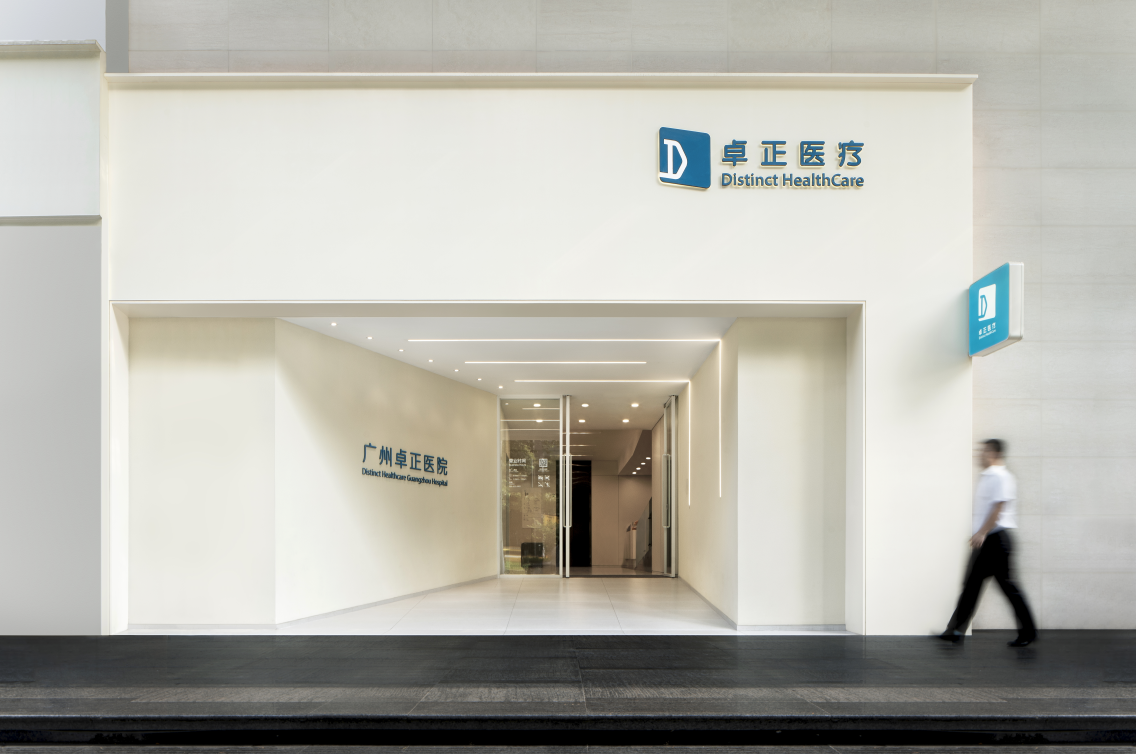
Photograph reused unchanged from the reference article.
International or VIP departments within public hospitals
Some public hospitals have international or VIP departments with their own appointment routes and charges. They remain part of the public hospital; an international department is not the same thing as a separate private hospital. Beijing's official medical guide lists international services at hospitals including Peking Union Medical College Hospital and China-Japan Friendship Hospital. These are Beijing examples, not a service available at every hospital across China. [3]
Ask whether the department can arrange the specialty or procedure you need, whether English communication or an interpreter is available for the whole visit, and whether tests or treatment take place elsewhere in the hospital. Also ask whether its fees and insurance arrangements differ from the standard outpatient department.
Prepare before you book
A few clear details help the booking team identify the right appointment. Describe your main concern, when it started, any existing diagnosis, and whether you are seeking an initial assessment, a second opinion, or ongoing care. If symptoms are severe or rapidly worsening, seek urgent assessment rather than waiting for a routine booking.
Have the following ready, and ask what must be sent in advance:
- Your passport details and the name exactly as it appears on your passport; confirm any spelling, spacing, or name-order requirements.
- A list of medications and supplements, including doses, plus allergies and any previous reactions to medicines or anaesthesia.
- Relevant consultation notes, diagnoses, test reports, imaging files, and procedure or discharge summaries.
- Your preferred language, any interpreter needs, and whether existing reports need an English or Chinese translation.
- Your insurance details, any referral requirements, and the dates and city in which you can attend.
Do not stop medicines or begin fasting just because a test might be needed. Request instructions from the clinical team for your specific visit. For a child or someone needing assistance, also ask about accompanying adults and any additional documents.
A typical outpatient visit, step by step
The sequence below is a planning aid, not a universal rule. The National Health Commission's patient guide, published on 5 March 2019, describes booking, registration, payment before tests, and pharmacy collection. Current procedures vary by hospital and may use different digital or in-person steps. [2]
1. Book and confirm the details
Ask which booking channel accepts foreign passport details. Hospitals may offer telephone or online booking, but account setup and identification requirements differ. Confirm the hospital branch, department, doctor if applicable, appointment date, arrival time, and consultation fee. Make sure the booking name matches your passport. [2]
Confirm language support explicitly: will the doctor consult in English, or will an interpreter assist? Does that arrangement also cover registration, testing, consent, and medication instructions? A booking page in English does not establish that every part of the visit will be in English.
In Beijing, the city's official medical guide describes appointment access through the English-language International Service Beijing WeChat and Alipay mini-programs. This is a Beijing-specific route; ask your chosen hospital about its own current booking options elsewhere. [3]
2. Arrive, register, and follow triage instructions
Bring your passport and booking confirmation. Ask where to complete registration, whether you need a patient number or card, and how you will be called. Some visits require a registration or consultation payment at this stage. If you are unsure of the department, ask the information or triage desk rather than joining an unfamiliar queue. [2]
Tell staff immediately if your condition has worsened or you have urgent symptoms. An outpatient booking does not replace emergency triage.
3. Have the consultation
Explain your symptoms, medical history, medications, and allergies, and show the relevant records. Ask what the doctor thinks may be causing the problem, what tests are proposed, and how the results could change the plan. If you do not understand an explanation or consent form, request clarification or language assistance before proceeding.
4. Arrange tests and check payment requirements
After the consultation, you may need to pay for ordered investigations before going to the laboratory or imaging department. Ask where each test takes place, whether it needs a separate appointment, and what preparation is required. Do not assume that every investigation can be completed the same day. The payment-before-testing sequence appears in the NHC's 2019 guide, but your hospital's current process may differ. [2]
5. Collect results and arrange their interpretation
Before leaving, establish when and how each result will be available and who will explain it. Ask whether you should return to the same doctor, book another appointment, or use a scheduled remote follow-up if available. A further registration or fee may be required, depending on the hospital. [2]
Receiving a laboratory report is not the same as receiving a clinical interpretation. Confirm the plan for pending results and what to do if you do not receive them by the expected date.
6. Pay for and collect prescribed medicines
If medicines are prescribed, ask where to pay and which pharmacy dispenses them. Payment before collection is described in the NHC guide; follow the instructions at your hospital. Check the medicine name, dose, frequency, duration, and important precautions with the doctor or pharmacist, and request understandable written instructions if needed. [2]
Costs, deposits, and insurance: confirm before treatment
Request an itemised estimate
A quoted consultation fee may not include investigations, medicines, procedures, anaesthesia, hospital admission, or follow-up. For planned care, request an itemised estimate in renminbi and ask which items are included, optional, or dependent on the doctor's assessment. An estimate is not a guarantee of the final bill.
If a procedure or admission is planned, ask whether a deposit is required, when it is due, how it is reconciled against the final bill, and what cancellation or refund terms apply. Confirm the payment methods accepted at that specific location. Beijing's guide describes cash, cards, and mobile payment options, with availability depending on the hospital; do not assume every hospital accepts every international card or payment app. [3]
International insurance and direct billing are not automatic
Direct billing means the hospital bills the insurer under an agreed arrangement. It is not the same as a promise that your plan covers every service. Beijing's official guide states that direct billing depends on an agreement between the hospital and insurer; your own plan, the hospital location, the department, and the proposed treatment still need checking. [3]
For planned treatment, ask the insurer and hospital whether preauthorisation is required and whether the hospital needs a guarantee of payment (GOP). Clarify who submits the request, what records are needed, and when a decision is expected. A GOP is an administrative payment arrangement subject to its terms, not an assurance that every charge will be covered.
Useful questions to ask both the insurer and the hospital include:
- Does my exact plan cover this location, department, and proposed service?
- Is a referral, preauthorisation, or guarantee of payment required before care?
- What deductible, co-payment, exclusions, or benefit limits might leave me with a bill?
- If direct billing is unavailable, what must I pay upfront and which documents are needed for reimbursement?
Review Distinct Healthcare's insurance partner information as a starting point, then confirm your individual arrangement. A listed insurer's name alone does not establish eligibility for direct billing or coverage under your policy.
Local public medical insurance depends on your circumstances
Foreign residents are not automatically excluded from public medical insurance, and not every foreign resident or visitor is enrolled or eligible. Eligibility and benefits vary with local rules and individual circumstances. If you may have local coverage, check your enrolment and applicable benefits with the relevant local insurance authority or your employer, and confirm how the hospital will process them. Do not assume that local coverage and an international policy work in the same way.
Plan follow-up and request the records you need
Before leaving, ask for the working diagnosis, treatment plan, medication instructions, follow-up timing, and symptoms that should prompt earlier assessment. If investigations are still pending, make sure you know who is responsible for reviewing them and how you will be contacted.
Ask how to obtain consultation notes, test reports, imaging files, prescriptions, itemised invoices, and any discharge summary. Record availability, release procedures, format, fees, and turnaround times vary. Keep copies you can share with your usual doctor, especially if you will leave China before follow-up is complete.
If you need an English medical report, request it explicitly. Ask which documents can be issued in English, whether translation is needed, whether there is a charge, and when they will be ready. Do not assume that an English consultation means every laboratory, imaging, or discharge document will automatically be in English.
For visitors planning a procedure, discuss the time needed for results, recovery, and follow-up before fixing departure dates. Confirm who to contact for postoperative concerns and how care will be handed over after you leave.
Medical emergencies in Mainland China
Dial 120 for a suspected medical emergency in Mainland China. Examples include severe chest pain, serious breathing difficulty, collapse, sudden weakness or difficulty speaking, or major bleeding. This is not an exhaustive list; if a situation appears immediately dangerous, seek emergency help rather than using this article to rule it out. [3]
Give the dispatcher your exact location, including the address, building entrance, floor, and nearby landmark if useful. Describe what happened, the person's condition, and a contact number. If communication is difficult, ask someone nearby to help while the emergency call is being made; do not postpone calling while searching for an interpreter.
Do not delay emergency assessment to secure a preferred specialist, book a clinic, obtain insurance approval, or wait for WhatsApp support. If you are already at a clinic or hospital, alert staff immediately. Administrative and insurance questions can be addressed alongside or after urgent care as circumstances allow.
How Distinct Healthcare can support planned care
Our international patient services in China cover health screening, specialist consultations, family medicine, dental care, surgery and endoscopy, and aesthetic services. Not every service is available at every location; confirm the clinical service and facilities relevant to your needs before booking.
The patient support team can help coordinate your preferred city and booking and support requests for medical reports. Tell the team your concern, language needs, dates, and insurance details. If you need reports in English, ask about availability and arrangements rather than assuming all documents will be issued in English. Explore our medical network to discuss an appropriate location. This planned-care support does not replace emergency services.
Frequently asked questions
1. Do I always need a Grade III Class A hospital?
No. A clinic or another hospital may be appropriate for a non-emergency consultation or ongoing care. For complex problems, focus on the relevant specialist team and facilities. San jia identifies a hospital level and assessment grade; it does not guarantee identical expertise in every department. [1] [4]
2. Can I use a public hospital with a foreign passport?
Public hospitals are an option for foreign patients. Confirm the passport registration process, booking channel, and correct department with the hospital. Access to care and eligibility for local public medical insurance are separate questions; check any local coverage that may apply to you rather than assuming either automatic coverage or blanket exclusion. [2]
3. Will an international or VIP department make the whole visit available in English?
Not necessarily. Confirm the consultation language, interpreter arrangements, and support for registration, tests, consent, and medicines. Some public hospitals have international departments, but services differ by location. English medical reports should be requested separately. [3]
4. Will my international insurer pay the hospital directly?
Only if the relevant arrangement is available and your case meets its requirements. Confirm your exact plan, hospital location, department, treatment, and any preauthorisation or GOP requirements with both parties. Ask what you must pay yourself and what reimbursement documents you need if direct billing cannot be arranged. [3]
5. How do I get an English report for my doctor or insurer?
Ask the hospital or clinic before your visit which reports can be supplied in English, how to request them, and whether translation, extra time, or a fee is involved. Specify the documents you need and any deadline. Availability is not universal, and a test report may still need a separate consultation for interpretation.
6. What should I do in a medical emergency?
Dial 120 in Mainland China, give your location and the person's condition, and follow the dispatcher's instructions. Do not wait for an outpatient booking, an insurance approval, or a message response. If you are already at a medical facility, tell staff immediately. [3]
References
[1] Distinct Healthcare. “Comprehensive Guide to China's Hospital System.” Background reference and source of the two original photographs reproduced in this guide.
[2] National Health Commission of the People's Republic of China. “Common procedures of seeing the doctor at Chinese hospitals.” 5 March 2019. Historical procedural guidance; confirm current arrangements with the hospital.
[3] The People's Government of Beijing Municipality. “Medical Guide for Foreigners.” Beijing-specific service and appointment information, together with guidance on emergency calls, payments, and hospital–insurer direct-billing agreements.
[4] National Health Commission of the People's Republic of China. “国家卫生健康委关于印发《三级医院评审标准(2025年版)》的通知.” Published 10 June 2025. The notice issues the 2025 tertiary hospital assessment standards and replaces the 2022 version.
Disclaimer & Credits
This article was drafted with AI assistance using the reference article and official guidance. It is an editorial draft awaiting professional review.
This is original content by Distinct Healthcare, provided for informational purposes only and not intended as medical advice. For personalised guidance, please consult a qualified physician.
Contact: health_content@distincthealth.com
Produced by: Distinct Healthcare · Health Express Team
Editorial: Health Express Editorial Team
Medical Review: Awaiting professional review