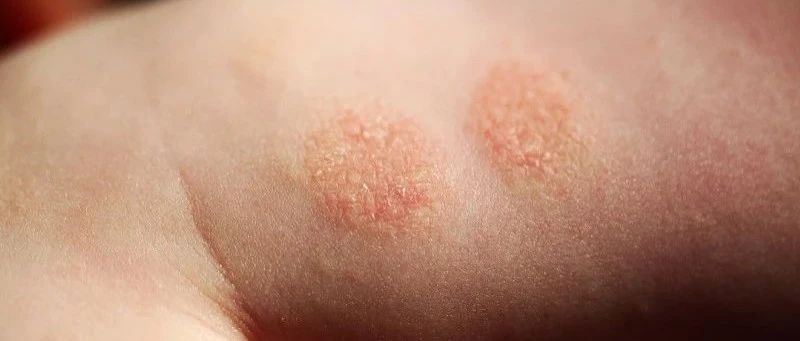


In fact, it may not be the case. Some skin diseases are very similar to eczema and are easily confused. Among them, some diseases have similar treatment plans to eczema, while others require specialized treatment, and the treatment plans may be quite different.
If treated as eczema by mistake, it may backfire, affect the diagnosis, and even worsen the condition.
Whether adults or children,
eczema is very common, but
…
Indeed,whether adults or children, eczema is one of the most common skin diagnoses, which often refers to skin inflammatory reactions with a tendency to exude.
is polymorphic and can manifest as red patches, papules, vesicles, erosions, exudates, and crusts, often accompanied by itching.
And
if it is not cured for a long time, it can develop into chronic eczema, withfused and thickened rash. There is also a subacute form characterized by papules, crusts, and scales.
Eczema
These skin diseases look like eczema,
and the treatment methods are also similar
Itchy erythematous papules are far more than eczema, some rashes can be “muddled through” by treating them as eczema, such as:
The most obvious symptom isrecurrent unbearable severe itching at specific skin sites, commonly on the neck, wrists, elbows, lower legs, and other areas that are easily rubbed.
Neurodermatitis
←Slide left and right to view→
And this itching forms a vicious cycle of “itch and scratch, scratch and itch more”. Long-term repeated scratching can cause changes in the skin, originally smooth skin will gradually become thick and hard, and the surface will appear rough patterns similar to moss.
The skin inflammation pathway is also a core link in the itching and skin thickening of neurodermatitis, so applying topical corticosteroid ointment like eczema can relieve itching and prevent skin from thickening and hardening.
Psoriasis
←Slide left and right to view→
However,psoriasis with large rash areas and frequent recurrences still requires comprehensive assessment to develop a more accurate plan.
The above are some diseases that have similar symptoms to eczema, and it is not easy to make mistakes when treated with eczema plans.
However,
there are some rashes,if only casually apply the commonly used drugs for eczema,it may make the situation worse.
The following are several rashes that require our high attention, have a certain similarity with eczema, but need specialized treatment.
These skin diseases look like eczema,
but the response plans are quite different
And some allergic contact dermatitis is caused by allergies to contact substances in some people. A more typical example that we rarely confuse with eczema is the so-called “allergy” to adhesive plasters. It appears as erythema, papules, and vesicles that basically match the position of the adhesive plaster, with very clear boundaries.
And some allergic contact dermatitis, such as allergies to hair dyes, cleansers, or fragrances, may not cause erythema with very regular boundaries, which may be mistaken for eczema.
In treatment,if we simply treat the symptoms of eczema with anti-inflammatory,although it can briefly make the rash subside, but without avoiding contact with allergens, it will lead torepetition and aggravation of allergic contact dermatitis, giving us an illusion that the skin is“resistant” to steroid ointments.
So in the following situations, it is recommended that we better exclude the possibility of allergy before applying the medicine ourselves:the rash is relatively clear, and the position of the rash has recently come into contact with new substances.
For example:
Scabies
In appearance, scabies and eczema are very easy to confuse, but several characteristics can warn us:
● itching worsens at night;
● can invade the genitals(such as papules and nodules appearing on the scrotal skin folds).
If scabies is suspected, it is recommended to seek medical attention offline. Although the diagnostic standard is microscopic examination to find mites, eggs, or their excrement, it is often the case that patients have few mites, and sometimes the gold standard evidence cannot be obtained.
And experienced dermatologists can use dermatoscopy to find areas with mites or tunnels, or make a presumptive diagnosis based on medical history and physical examination results. If scabies is not treated properly, the mites can comfortably settle and reproduce on the body, and they also spread from one to two, which may lead to a whole house becoming a breeding ground for mites.
Tinea pedis, especially the vesicular and hyperkeratotic types, is very easy to confuse with eczema in the eyes of many people.
And tinea corporis, especially in the early stages of development, before fully presenting the characteristics of clear red patches with slightly raised edges like petals, is also very easy to confuse with the acute eczema manifestations of the trunk and limbs, but
its treatment is completely different from eczema.
Eczema requires anti-inflammatory treatment, and we often use topical corticosteroid ointments for anti-inflammatory purposes, while fungal infections require corresponding antifungal treatment.
If a rash of fungal infection is mistakenly treated with corticosteroids, the rash may seem to subside in the short term, but it will recur and worsen after stopping the medication, and this cycle may lead to the difficult-to-identify ringworm that we often see in dermatology case discussions.
So when we have relatively clear erythematous rashes on our body, especially if there are pets like cats and dogs at home;blisters on the feet, often starting unilaterally and with cohabitant has nail fungus and other factors, it is recommended to consider offline consultation, to assess whether there is a fungal infection factor. If it’s really unclear, we can also perform a fungal smear test to confirm whether there are fungi.
Zhong Hua
References