
丨Author of this article: Liu Jiajia, otolaryngologist at Distinct Health
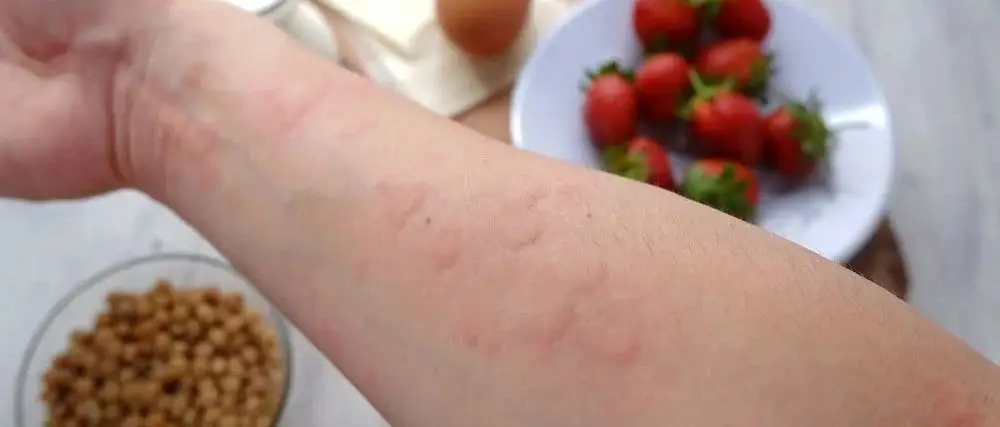
Some children have rhinitis, often sneezing and running nose; some children have eczema, rashes always come and go; some children retch as soon as they eat something, or there are blood streaks in the stool…
What to do? Go to the hospital for an allergy test, and find out that you are allergic to many things, sometimes even to things you often eat, and suddenly you don’t know what to eat!
Therefore, today I am sharing this case with you to help you understand the correct use and interpretation of allergy tests, and to correctly view the occurrence of “allergic symptoms” in children.*Thank you to the client and Dr. Liu Jiajia for their authorization and support for this article.
Client’s First Question
The child’s father has an allergic constitution, and the child has rhinitis, usually takes care of washing the nose, no special eczema, bloody stool, etc.Now more than 4 years old, due to sinusitis repeated fever for 1 week.
Checked for allergies, since childhood boiled eggs are very averse to dry retching performance.But like fried eggs and steamed eggs, thought it was just dislike the taste. Like
pure milk but found that after eating it feels itchy, but there are no obvious allergic signs, so I have been drinking formula milk.
This time the test shows high allergy to eggs and milk, does this mean that eggs are completely off the table?
Dr. Liu Jiajia’s Reply
Dear parent, thank you very much for your trust.
I will reply to your questions below and also ask you to supplement some medical history.
Let me first talk about some issues that parents might worry about.
1. Does the child have allergic rhinitis?
Based on the current examination results, it does not strongly support the diagnosis of allergic rhinitis in the child.
Allergic rhinitis is not rhinitis caused by sensitivity, but is due to the body’s special immune state, producing specific antibodies(these antibodies are called IgE)against certain allergens.Cold air, viral infections, and physical chemical factors can also cause similar symptoms such as nasal congestion, clear rhinorrhea, and sneezing.
(Symptoms of allergic rhinitis)
Therefore, a definitive diagnosis of allergic rhinitis must be supported by the results of allergen tests.
I guess that perhaps when the child was seen by a doctor before, they said the child had allergic rhinitis.
This kind of diagnosis is what we call a clinical diagnosis, and it is not the final confirmation. It is a clinical diagnosis made by the doctor based on the child’s performance(rubbing nose, rubbing eyes, sneezing, clear rhinorrhea, etc.), and signs(pale and edematous nasal mucosa).
The early manifestations of children’s repeated acute upper respiratory infections are actually quite close to allergic rhinitis.Children can also have sneezing, clear rhinorrhea, but they may soon become thick rhinorrhea.
And if we assume that in this case, we use cetirizine and other antihistamines, the child will not show significant improvement.
So, what do we mean when we say that allergic rhinitis must be supported by the results of allergen tests? The gold standard is called nasal mucosa provocation test.
It means that the child’s nasal mucosa comes into contact with these suspected allergens and then begins to show typical nasal congestion, sneezing, and clear rhinorrhea, which is a positive result and can confirm allergic rhinitis.
This test is generally not performed in domestic hospitals. What we do is allergy testing, which is the result of the picture below.
The result is accurate. If there is an increase on this result, it indicates that the child’s body has sensitized to these allergens,but sensitization does not necessarily mean allergy. It is only when he has symptoms upon contact with these substances that it indicates a true allergy. The higher the value, the greater the probability that the child will have an allergy to these substances.
So, in the child’s result, there is no increase in aeroallergens. If the child alsodoes not show typical positive symptoms(meaning he comes into contact with these substances and starts to show symptoms. For example, dust mites start to rub their noses, sneeze, and have clear rhinorrhea when they come into contact with carpets, curtains, wardrobes, bookshelves), then we do not need to consider allergic rhinitis for the time being.
However,allergic conditions can change.The fact that these values are not increased now does not mean they will not appear in the future. Many people suddenly develop allergic rhinitis at a certain point when they grow up.
So, regarding this, we can observe first. Although the child’s father has allergic diseases, the probability of him having allergies is relatively high, but he did not have severe eczema and food allergies when he was a child, and he did not seem like a child with an allergic constitution.
So, if the child does not show these typical symptoms at present, we do not need to consider the diagnosis of allergic rhinitis for the time being.
2. Does the child have food allergies?
Parents may be more concerned about their child’s food allergies, which are more complex than allergic rhinitis, which is a type of airway allergy.
Because allergic rhinitis is a type I allergic reaction. It is caused by IgE, which is the result of the monitoring above, so the result of aeroallergen-specific IgE is quite accurate.
The higher the value, the greater the probability that the child is allergic to the corresponding substance. However, this is for aeroallergens, such as dust mites, pollen, cat and dog hair, cockroaches, mold, and other airborne substances.
Food allergies are different; they have multiple types of allergic reactions. A single test does not indicate the problem.The gold standard for diagnosing food allergies is called the provocation avoidance test.
It means that when the child eats these substances, symptoms appear, and after avoiding them, the symptoms subside, which is considered a true positive for food allergy.
The most typical food allergies, you may have heard, some children develop rashes immediately after eating nuts, and even have difficulty breathing, requiring rescue.
These types of severe food allergies are type I allergic reactions, and the IgE checked above will be elevated. At present, we definitely do not consider this issue for our child.
The part I outlined in red is the result of the food IgE test,none of them are elevated, and the child has no reaction. This indicates that the child is not likely to have a severe allergic reaction to these foods.
3. What to do if there are symptoms but the test is not allergic?
Some children may have no increase in this value, but they have symptoms after eating, most of which will manifest as skin symptoms, including worsening rashes, some may also have gastrointestinal symptoms, including diarrhea, mucoid bloody stools, etc., and some may have itching and stinging of the oral mucosa.
We also need to consider the possibility of food allergies in this case, so we will avoid the corresponding suspicious foods for a period of time to see if the child’s symptoms improve, and then try to add them again. If the child starts to show corresponding symptoms as soon as they are added, we need to consider that the child may still have an allergic reaction to this food.
As for the different reactions to boiled eggs, fried eggs, and steamed eggs that you mentioned, they are all high-temperature processed, and whether they are allergic or not is not related to the method of processing, but only to whether they are thoroughly cooked, and the proteins are denatured. You don’t need to worry.
4. Food intolerance and food allergy are two different diseases
Although your test is called a food intolerance test, it checks for another type of specific antibody, called IgG.
Firstly, food intolerance and food allergy are completely different diseases, and food intolerance does not check for IgG, meaning this test has no significance for us to refer to.
Food intolerance is not diagnosed by food IgG testing.
The definition of food intolerance is a non-immune reaction, including metabolic(lactase deficiency), toxic(such as histamine-like toxins in spoiled fish), pharmacological(monosodium glutamate and other natural food substances such as salicylic acid and amines), and unknown mechanisms.
In other words, food intolerance cannot be diagnosed based on IgG testing, but should pay more attention to the ingredients behind the food, to enjoy the delicious food while seeing the “wolves in sheep’s clothing” in the delicious – such as histamine, tyramine, salicylic acid, oligosaccharides, etc.
Because these may be the real “culprits” of food intolerance.
5. What can the child do next?
For the child’s current situation, he has no reaction to eating eggs, and there is neither food allergy nor food intolerance to eggs, so eat them normally.
The child has a little skin itch when drinking pure milk, and now we use formula milk with no problems, you can continue to use formula milk.
Milk allergies, generally, children can start to slowly tolerate after the age of five or six. If you want to let the child try, it is actually possible. You can try to add milk again and see if he starts to show similar symptoms, including whether the rash is good, the stool is good, and whether the skin itch is really related to the addition of milk or caused by other reasons?
If the child shows symptoms again after adding it, then we temporarily do not add milk and continue to use formula milk.You can try again after half a year. So, for the child’s situation, we cannot avoid giving him food based on this result, thinking that the child has food allergies or food intolerance.
Please take a look, have I explained your doubts clearly, is there anything you don’t understand?
Client’s Second Question
Thank you, doctor. Your explanation is very clear, and I understand.
The child has been rubbing his eyes and having nasal congestion since he was young, so we have been washing his nose diligently since he was two months old. Looking back, he is also prone to this when there is a change in temperature.
My personal principle since adding complementary food has been to try to tolerate as much as possible. Eggs were indeed mainly fried or steamed later, and boiled eggs were given less frequently.
This time, I still feel that because 1. In April, there were two infections with influenza A and EB virus, and 2. On May 1st, due to the weather, he caught a cold and had a fever, leading to a general decline in immunity, and he lost 4-5 pounds in a month.
Before, he had a fever once every half a year to a year, but these two months, due to going to kindergarten after the epidemic and the rampant spread of various viruses, the risk of infection has indeed increased. This time, sinusitis was also due to cross-infection, with cough, fever, and rhinorrhea for more than a week, showing this physical examination result.
I personally think that we are not an allergic constitution and should belong to the problem of tolerance level. So, what should we pay attention to after frequent infections and fevers in the short term?
Dr. Liu Jiajia’s Reply
Dear parent:
1. My view is actually the same as yours. I think the child’s current recurrent attacks are due to recurrent infections, including recurrent viral infections, and after the immunity decreases, bacterial infections are superimposed, leading to sinusitis.
2. The probability of recurrent infections in children of this age is very high. They are now in the process of acquiring immunity, which is actually obtained through repeated infections and interactions with bacteria and viruses to gain resistance.
Plus, when we enter the park, the probability of cross-infection will be even greater, so, for children of this age, this situation will be more common and universal.
3. For this situation, our suggestion is that if it is during a viral infection, do not abuse antibiotics.
For example, when the child starts to have nasal congestion and clear rhinorrhea, we can first wash the child’s nose. If the child rubs his nose and eyes frequently, we can also try to give him some antihistamines like cetirizine.
If the child’s symptoms improve quickly, the concept of quickly is, fast within two to three days, slow within four or five days, we should consider that it may indeed be caused by allergies.
But if the child’s symptoms do not improve after taking it, and later start to have thick rhinorrhea, even white, yellow, green, opaque purulent rhinorrhea, then we should consider that this is caused by an infection.
Viral infections can also cause purulent rhinorrhea, but generally, it does not last too long. For this situation, we can strengthen the child’s nose washing to unblock drainage and promote the discharge of bacteria and viruses.
A common upper respiratory tract infection will generally last seven to ten days, not exceeding 14 days, the symptoms will worsen, and then develop in a good direction.
If the child’s symptoms last a long time, such as rhinorrhea and nasal congestion for more than 14 days. We used cetirizine and there was no improvement. Especially if we can find purulent rhinorrhea when washing the nose, then we should consider the possibility of sinusitis.