
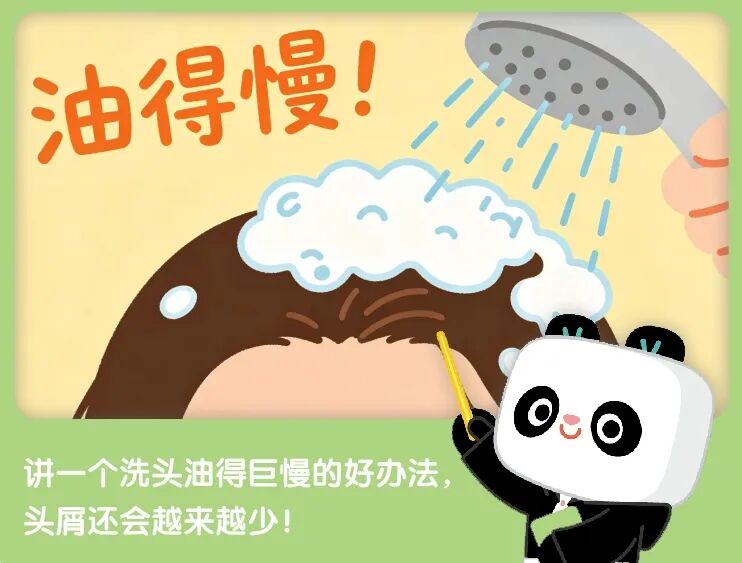
Does anyone else feel this way? If you do not wash your hair for just one day, the top of your head looks so oily the next day that it is unbearable to look at. It is really frustrating!

And some people not only develop scalp oil quickly, but also become very prone to itching. When they scratch, it feels as though more and more dandruff is being picked out.
You wash your hair carefully every time and have tried a number of shampoos, so why do scalp oil and dandruff still refuse to go away?

Oily Scalp and Recurrent Dandruff: the Overlooked Culprit
Malassezia
Generally speaking, non-pathological scalp oil can be related to diet and lifestyle habits or an impaired scalp barrier, but it is also closely related to an often overlooked factor: Malassezia.
Malassezia is a lipophilic fungus. It is present on almost everyone’s scalp and is part of the normal resident microbial community.
It feeds on fatty acids in sebum. When the scalp produces abundant sebum (for example, in humid and hot conditions or under stress), the plentiful oil provides this fungus, which likes to ‘eat oil’, with a rich source of nutrients and promotes its overgrowth.
The metabolites left behind after Malassezia has ‘eaten’ the oil (such as oleic acid) can not only irritate the scalp and trigger an inflammatory response, but may also produce large amounts of dandruff, worsen scalp itching, and even cause a slight odour.

How Can You Wash Your Hair Day to Day?
If Your Scalp Gets Oily, How Should You Choose Shampoo?
If your oily-scalp symptoms are not very severe—for example, your hair becomes oily one to two days after washing—you can pay particular attention to your hair-washing technique and your choice of hair-care products.
Hair-Washing Technique
People with oily scalps can pay attention to the following four points while washing their hair:
1. Wash your hair twice: use shampoo for the first wash to remove most dandruff, dust and excess oil. After rinsing, apply shampoo for the second wash and massage the scalp with the pads of your fingers to help control oil.
2. Let the shampoo foam remain: after applying and lathering the shampoo, let the foam stay on the scalp for about three minutes before rinsing.
3. Apply conditioner to the hair ends: after shampooing, if you do not want the ends of your hair to become dry and split, you can apply some conditioner to the ends. Leave it on for a while before rinsing, taking care not to apply it to the scalp.
4. Blow-dry as soon as possible: after washing your hair, do not wrap wet hair in a towel or hair-drying towel for too long. It is best to blow-dry it within 10 minutes if possible.

Choosing Hair-Care Products
When choosing hair-care products, you can look for the relevant surfactants and ingredients:
Cleansing and keratin-regulating ingredients
Choose a shampoo containing sodium laureth sulfate and salicylic acid.
Dandruff-relieving and anti-itch ingredients
Choose a shampoo containing piroctone olamine (OCT, also known as ‘piroctone ethanolamine salt’) and selenium disulfide.
These ingredients have antifungal properties and can inhibit Malassezia, which is closely related to dandruff. To ensure safety, daily-use chemical products have upper limits on their added concentrations.

Selenium disulfide, in particular, is a recognised expert in the field of dandruff control. In addition to being antifungal, it can reduce the fatty-acid content of sebum and inhibit excessively rapid growth of keratinocytes, and therefore has a good dandruff-relieving effect.
The higher the concentration of selenium disulfide, the stronger the dandruff-relieving effect, but the greater the corresponding skin irritation. For daily care, you can choose a product with a lower concentration; for moderate to severe dandruff, a higher concentration can be used under a doctor’s guidance.
References
[1] Adalsteinsson JA, Kaushik S, Muzumdar S, Guttman-Yassky E, Ungar J. An update on the microbiology, immunology and genetics of seborrheic dermatitis. Exp Dermatol. 2020 May;29(5):481-489. doi: 10.1111/exd.14091.
Disclaimer & Credits
This article was initially drafted with AI assistance, refined by our editorial team, and finalised following professional review by Distinct Healthcare physicians.
This is original content by Distinct Healthcare, provided for informational purposes only and not intended as medical advice. For personalised guidance, please consult a qualified physician.
Contact: health_content@distincthealth.com
Produced by: Distinct Healthcare · Health Express Team
Editorial: Health Express Editorial Team
Medical Review: Distinct Healthcare Physician Team