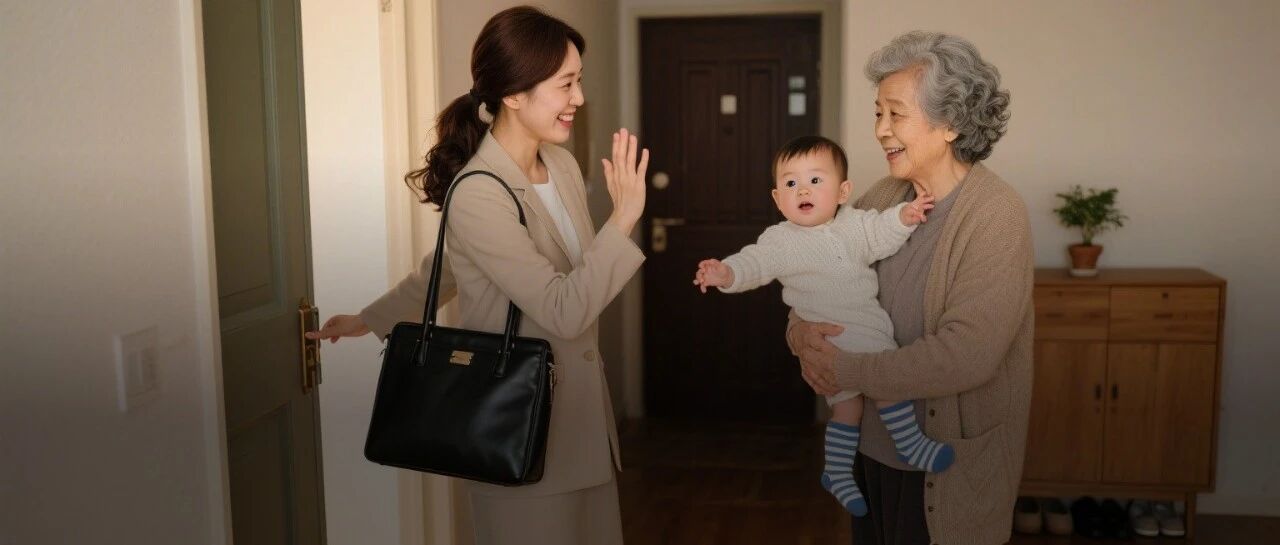

As the winter vacation draws to a close, the parent-child relationship in more and more families has sounded the alarm. Many parents feel wronged: Although they have tried their best to communicate with their children gently and calmly, the children are like “little firecrackers”, which can be easily ignited and cannot be scolded at all.
Today, let’s talk about where the problem lies?
Scene One
My five-year-old son is sitting on the sofa watching the cartoon , watching with great interest. I looked at the time, it’s already 21:15 .
“Baby, it’s late, it’s time to get ready for bed. You need to be in bed by 21:40. Do you know what time it is now?”
“No, the rescue mission is not over yet!”
“No, it’s not good to sleep too late, and last time you watched cartoons for too long and couldn’t sleep well in the middle of the night. Do you remember? Turn off the TV.”
“Mom is a big bad guy! I want to throw you out!” (The child is furious)
I feel so wronged and heartbroken: I did it all for his own good, and in the end, I became the “bad guy”.
Scene Two
After work on Friday, I dragged my tired body back home, and the takeout spicy hot pot and chilled happiness water I ordered in advance were quietly waiting at the door, as if calling me: come on, the happy weekend starts!
I rushed into the house, and before I could hide in the bedroom to enjoy the meal, I was caught by my mother who came to see her grandson.
“Eating takeout again? It’s all junk food, be careful about diarrhea.”
“Mom, I’m just having a little bit…”
“Still drinking Coke? Not afraid of gaining weight?”
“I don’t drink it every day…”
“Take care of your health.”
“Mom, I’m not a kid anymore, can you stop nagging?” (I’m furious)
At that time, I quickly slipped into the bedroom to hide, and before closing the door, I heard my mother’s nagging voice: “It’s all for your own good, if it weren’t for your mother, why would I care so much, minding what you eat and drink…” (My mother is also furious)
My mother’s nagging fell on my ears, and I felt a lump in my heart: Isn’t this the same as the other day when I asked my son to turn off the TV and ended up being retorted?
After the anger and irritability subsided, I started to think: why do parents always feel that they are doing good for their children, and children (for example, me) will not question the good intentions of their parents at all, but still produce more negative emotions?
I even thought of some cases in the clinic, parents love their children deeply, but children try to avoid or cut off the relationship with their parents. Why does the purest good intention sometimes lead to the most destructive consequences?
“Good intentions” do not equal “effective communication”
Perhaps we are blinded by “good intentions” in conflicts and contradictions, but the truth may be concealed: in communication, good intentions do not guarantee good results; in fact, the effect of communication is often defined by the recipient.
Yang Tianzhen’s podcast has an episode on nonviolent communication, in which she proposed that sometimes she feels she is expressing good intentions, but her employees do not feel it, especially when contradictions occur, her well-intentioned intervention makes the other party’s negative emotions more severe. There may be a significant gap between the expression of intent and the reception of feelings.
For example:
She wanted to help her employees solve problems: “Don’t worry, let’s analyze what went wrong and how to avoid it next time.”
She wanted to soothe her employees’ emotions: “It’s okay, it’s not a big deal, don’t be so upset.”
But the employees act very disappointed , even very resistant.
She reflected that she focused on “solving the problem”, such communication is very dominant, which makes the other party clearly feel a condescending judgment. .
In addition, when people are trapped in emotions, what is needed first is emotional identification, not solutions, at this time, emphasizing “you don’t have to be sad” is equivalent to saying “your current emotions are wrong, unnecessary”.
And true kindness is not to treat others in the way you think is “right”, but to connect in a way that the other party can feel “good”.
The “good intentions” at the bottom are not perceived
It is the emotional needs of the parents themselves
One of the key elements of nonviolent communication is—— expressing inner feelings.
Parents often find it hardest to perceive their own feelings, let alone express them in words.
For example, the parents who nodded in agreement when the phrase “I am doing this for your own good” was mentioned, let’s think together – when the thought or words “I am doing this for your own good” come to our minds or are spoken, what was the scene like at the time, what feelings do you have?
-
Is it “I worry that you will suffer in the future” worry?
-
Is it “I am afraid that I am not a good parent” anxiety?
-
Is it “I am powerless to alleviate my child’s pain” helplessness?
-
Or is it “I am old, and my child may not need me anymore” fear?
We need to honestly ask ourselves: “Am I doing this (well-intentioned intervention) , because I really see the child’s needs? Or is it more because, when I see the child like that, I am too uncomfortable and need to do something to soothe my own emotions?”
Once our main motivation for intervening is to “soothe our own emotions”, then this intervention will carry the energy of “urging”, “controlling” and “eagerly solving problems” . Such energy will prevent us from seeing the child’s needs, and instead, we will put on the cloak of “for your own good”, pushing pressure and responsibility onto the child.
Especially when this cloak is also equipped with the armor of “power” (here, some invisible power struggles between parents and children are involved. If readers are interested, we can write another article in the future to discuss in detail) , it is often thrown at the child in the form of commands or accusations.
At this time, the child cannot hear our “good intentions”, only “I am right, you are wrong”.
Adjustments from the perspective of nonviolent communication: moving towards connection
The purpose of nonviolent communication, is not to persuade the other party to agree with me, but to help us establish connections with others and ourselves. Let our language no longer be just a habitual automatic response, but firmly based on perceiving feelings and needs , making a conscious response [1] .
1. From judgment to observation
In Scene One, if I could let go of judgment at the time and observe more, perhaps I could more easily see the child’s current happiness (the child mentioned “the rescue mission is still ongoing”) .
Or, if in Scene Two, my mother could observe my fatigue, or I could observe my mother’s anxiety about “junk food”, there might be different communication and outcomes.
2. Express vulnerability rather than correctness
After more observation, how to express one’s feelings? It is recommended to express “vulnerability”, such as:
“Baby, I am very worried about your health (feeling) , I am worried that you are so busy with work and eating unhygienically, your body may not be able to bear it.”
“Mom, hearing you criticize me for eating takeout, I feel very wronged (feeling) , but I have worked for a week, I am really tired, I want to use the stimulation of taste to give me some short-term relaxation (need) .”
3. Express needs and create connections
“Baby, I hope you can be healthy (need) , so I don’t want you to always eat takeout. But I didn’t expect that, a meal of takeout is so important to you young people (connection) .”
“I am doing this for your own good” The reason why good intentions often trigger resistance and aversion is not because they are not “good”, but it turns love into a one-sided declaration, rather than a two-way connection.
When parents are willing to let go of the posture of “authority” and “correctness”, express their own vulnerability and care, see the desire for autonomy behind the confrontation, it is possible to cross this communication gap, allowing love to flow naturally in a way that is accepted by the other party.
The essence of this dilemma may lie in the fact that we often debate “methods” in the name of love, but forget that love itself needs to be expressed in a “feeling” way.
Peer-review expert Xie Yunshi
Distinct Health psychiatrist Master’s degree from China Medical University
References
[1] Rosenberg, M. B. (2021). “Nonviolent Communication” (Liu Yi, Trans.). Huaxia Publishing House.