
丨Click on the card above to make an appointment or consult a doctor
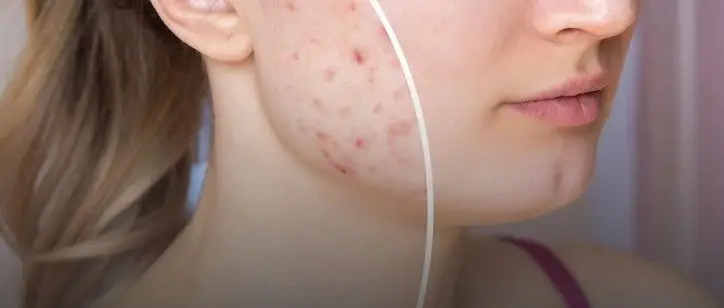
More and more children in third and fourth grades have started to develop acne. Especially recently, as every household is preparing for the New Year, the children’s mouths have already celebrated the “New Year” – fried goods, biscuits, candies, eating handfuls,in no time,their faces aresprinkled with a few red pimples.
Parents are forced to worry about the “face project” –Can children use facial cleanser? Can they use acne products?
At what age can children use facial cleanser?
0-7 years old
In most cases:
-
0-1 year old: Appropriate clean water cleaning every day is enough, and baby-specific bath products can be used occasionally when necessary.
-
After 1 year old: Outdoor activities increase, but daily cleaning is still mainly with clean water. If there is obvious dirt, sweat, or high SPF waterproof sunscreen is used, you can choose mild pH, soap-free children’s bath products. Special facial cleaning products are usually not needed.
Children whose sebum secretion begins to increase noticeably (commonly after 8-9 years old, but it may be earlier)
At this stage, some children will gradually experience:
-
Increased oil production
-
Closed comedones, blackheads
-
Small pimples
At this time, you can start using children’s cleansing products, or ordinary amino acid cleansing products (simple ingredients, mild formula).
After using cleansing products, it is best to pair with mild, easily absorbed moisturizing lotion for moisturizing care, while avoiding the risk of aggravating acne accumulation. It is not recommended to only wash your face without moisturizing.
Which skincare products can children with acne use?
8-9-year-old children begin to develop acne, which is commonly referred to as “pre-adolescent acne”.
The main reasons for the occurrence of pre-adolescent acne are related to the following factors:
-
Fluctuations in hormone levels: Before adolescence, fluctuations in hormone levels in children lead to increased sebum secretion, causing acne.
-
Genetic factors: Children with a family history of acne are more likely to develop acne.
-
Improper skincare: Using greasy or unsuitable skincare products may exacerbate the formation of comedones.
-
Dietary factors: High sugar and high-fat diets may exacerbate acne.
-
Environmental factors: Air pollution and hot and humid environments may irritate the skin.
For children who have already developed acne and comedones, in addition to the routine daily cleansing and moisturizing care, doctors may recommend using acne-control and acne-removal ingredients in skincare products, such as:
-
Low concentration salicylic acid preparations, which can gently exfoliate and are suitable for local spot treatment of inflammation.
-
Skincare products containing zinc or tea tree oil, which can gently control oil, naturally antibacterial, anti-inflammatory, and are suitable for local spot treatment to improve acne.
-
Skincare products containing aloe, which can soothe and moisturize, and are suitable for improving red post-acne marks and rashes.
⚠️Parents should be cautious about the following ingredients:
-
High concentration acid (such as glycolic acid, salicylic acid), which may irritate the skin.
-
Toner products containing alcohol, which can cause excessive skin dryness and irritation.
-
Benzoyl peroxide and retinoid drug ingredients, which are highly irritating and should be used under the guidance of a doctor.
What can be used to fade various marks on older children’s bodies?
Can they use skincare products for fading spots?
Some parents may also want to ask, it’s already the New Year, and the marks from mosquito bites on their children last summer haven’t faded yet, what should they do?
For the early red reaction of mosquito bites, older children can refer to the products for removing red acne marks mentioned earlier, such as aloe preparations or licorice acid components.
For persistent black marks that do not fade for months, older children can try using body lotion with niacinamide to accelerate the fading of pigment.
Can children with freckles use skincare products for fading spots?
In addition to acne, consulting on “what to do about children’s freckles” is also very common in dermatology. Children spend more time outdoors and if sun protection is not done well, the risk of facial freckles and solar lentigines will significantly increase.
Solar lentigines, often referred to as sunspots, usually appear due to long-term exposure to the sun, where ultraviolet rays stimulate an increase in melanin production in the skin. Freckles are usually related to family genetics, and sun exposure can exacerbate them.
When parents notice multiple pigmented patches on their child’s face, do not rush to use spot-fading products, but pay attention to moisturizing and sun protection for the child. Sun protection suggestions:
-
All exposed skin parts need to be applied with sunscreen, and reapply every 3-4 hours;
-
Pair with physical sun protection(umbrellas, sun-protective clothing, etc.), to block the long-term effects of ultraviolet radiation on the skin.
As for the already developed pigmented patches, they usually require laser treatment for removal. The effect of using skincare products to fade these pigmented patches is poor,not recommended for routine use of freckle-removal skincare products for children.
Peer Review Expert Zhong Hua
Distinct Dermatologist Ph.D. from the Third Military Medical University, Visiting Scholar at the University of Texas MD Anderson Cancer Center
References
Content Editor Sun